If you still have questions after reviewing this page, contact the Pre-medical Committee (premed-committee@oregonstate.edu).
Academics, advising and clubs
What's the best major for medical school?
Students can apply to medical school with any major, as long as the required courses are taken. For most medical schools, that is a year each of the following:
- General Chemistry (CH 231/261 series)
- Principles of Biology (BI 211 or BI 221 series)
- Organic Chemistry (CH 331 or 334 series)
- General Physics (PH 201 or 211 series)
OHSU also requires Biochemistry (BB 450 or BB 490 series) and Genetics (BI 311 or MB 310). Many schools also require some liberal arts courses. General Psychology (PSY 201, 202) and Introduction to Sociology (SOC 204) in particular are good preparation for the MCAT.
You should choose a major which interests you. Common choices are in Science (Biology, Biochemistry and Molecular Biology, Chemistry, Microbiology, etc.), Engineering (Bioengineering, Chemical engineering, Radiation Health Physics, etc), Public Health and Human Sciences (Kinesiology, Nutrition, Public Health, etc) or Liberal Arts (Philosophy, Psychology, Spanish, etc.). Learn more about choosing a major.
What is on the MCAT?
In 2015, a new Medical College Admission Test (MCAT) was introduced. There are 4 sections:
- Biological and Biochemical Foundations of Living Systems
- Chemical and Physical Foundations of Biological Systems,
- Psychological, Social and Biological Foundations of Behavior, and
- Critical Analysis and Reasoning Skills
It is important to begin serious study of the liberal arts early in your program as preparation for the MCAT. Broad reading is also important. Learn more about the MCAT.
What are the required courses for medical school?
Generally these include a year each of General Chemistry, General Biology, General Physics and Organic Chemistry; OHSU also requires Biochemistry, Genetics and a math class. College level math is generally required along with statistics highly recommended or required by some. Many schools also require some liberal arts courses, and it is important to take those classes early because the reading and writing are good preparation for the MCAT. General Psychology (PSY 201, 202) and Introduction to Sociology (SOC 204) in particular are also recommended in preparation for the MCAT. Be sure to take those for a grade, and work just as hard in those classes.
What other courses are recommended?
Courses which bridge the sciences and liberal arts, such as Medical Anthropology (ANTH 483), Biomedical Ethics (PHL 444), Brain and Behavior (PSY 330), etc. are very relevant. Courses which help you understand more about the human condition are always good; suggestions include Families in Poverty (HDFS 447), Sociology of the Family (SOC 312) etc. Courses dealing with public health such as Intro to Health Services and Organizations, (H 210), are very helpful as well.
What is the Medical Humanities Certificate program?
The Medical Humanities Certificate provides OSU students with essential skills in the "art of healing":
- Critical reflection on medical knowledge
- Interpretations of medical and patient experience
- Engagement with ethical dilemmas
- Acquisition of cultural and civic competency
- Cultivation of an ethos of professionalism
It is a transcript-visible 27-credit curriculum.
Will I have a pre-med advisor?
Yes. There are a number of pre-med advisors in various departments at OSU. They are members of the Pre-medical Committee. You should meet with him/her regularly in order for the advisor to know you well enough to write a committee letter on your behalf when you apply.
How can I learn more about medical school and medicine as a career?
Enroll in BI 109 - a seminar for pre-medical students. This is a one-credit course offered every spring term that is graded P/N. The course covers information about the field of medicine and the application process; guest speakers visit throughout the term. Also refer to the websites for the Association of American Medical Colleges and American Association of Colleges of Osteopathic Medicine.
I've heard about a combined MD-PhD program. How does that work?
Many medical schools offer a combined program where the student can combine their passion for research and earn a PhD along with the MD. For more information see the AAMC's websites: Graduate Research, Education, and Training (GREAT) Group or Applying to Medical Research Programs.
Where are the medical schools in Oregon?
Oregon Health and Sciences University is an allopathic (M.D.) medical school in Portland. Western University's College of Osteopathic Medicine of the Pacific Northwest (COMPNW) is an osteopathic (D.O.) medical school in Lebanon.
What's the difference between allopathic and osteopathic medical schools?
Allopathic (M.D.) and osteopathic (D.O.) medical schools both provide the education and training necessary to practice medicine. While both schools employ the benefits of modern medicine (prescription drugs, surgery, and technology), osteopathic medicine also utilizes osteopathic manipulative techniques to diagnose and treat patients. NOTE: As of 2020, graduates of both MD and DO schools are eligible for all medical residencies in the United States.
What GPA is required to get into medical school?
The average GPA of admitted students varies each year, however, a 3.70 is average for allopathic schools (M.D.) and a 3.54 for osteopathic schools (D.O.). Remember that medical schools look at many factors besides grades when making admissions decisions so there is a broad range of GPA's in each entering class. Academic momentum is important; excelling in upper-division courses can help offset a slow start.
What about retaking a class? How will medical schools view repeats?
Medical schools will consider all attempts of a course in regards to the calculation of your GPA. You must have at least a C in all pre-med prerequisite classes. Students should retake a prerequisite course in which they earned a C- or lower in order to meet this minimum requirement. (All prerequisite courses should be taken for a grade and not S/U or P/N grades). You should consider if you are able to significantly improve in a course before deciding to retake it. Retaking a course should be carefully considered, so please be sure to check in with your advisor before making any decisions.
Can AP and IB courses be used to fulfill the pre-med requirements?
Most medical schools will accept AP and IB credit for pre-med requirements especially if advanced work in that academic area is also taken (with regard to sciences). Some med schools will accept AP or IB for some sequences, but not others; and other times they may not accept AP or IB credit at all. Most medical schools will not accept CLEP credit for required science courses. Ivy League and California medical schools can be especially particular regarding AP and IB credits.
Examples of some of the medical schools which have some restrictions regarding the use of AP credits are: Baylor, California Northstate, Case Western, Cornell, Creighton University, Harvard, UCLA, UCSF, UC Irvine, University of Nevada Las Vegas, Louisiana State University, Michigan State University.
It is the student’s responsibility to check the requirements for each school to which they are applying.
Can pre-medical requirements be fulfilled by taking online courses?
Most medical schools will not accept online science lab courses. A hybrid course with online lectures and in-person labs may be acceptable. Other non-lab courses may also be acceptable if taken online. It is the student’s responsibility to check the requirements for each school to which they are applying.
Can pre-med requirements be taken at a community college?
Yes, but medical schools prefer that the majority of the pre-medical requirements and/or upper-level sciences be taken at a four year institution. It is the student’s responsibility to check the requirements for each school to which they are applying to verify their acceptance of community college credits.
Can international students be admitted to US medical schools?
It is very difficult for international students to gain admission to a US medical school. Of the few schools that accept international students, many require proof of ability to pay for the entire program. International students have a ~2% acceptance rate to medical school; therefore, it is especially competitive for them to gain admission.
For more information, check out the AAMC's website.
Can someone from a disadvantaged background gain admission to medical school? What if no one from my family was a doctor? What if I came from a high school where there were no advanced classes?
Medical schools are very committed to admitting a broad and diverse class in order to meet the healthcare needs of our changing population. There are a lot of resources at OSU that can help you strengthen your academics. There are also summer programs at medical schools that are designed to help support rural, disadvantaged and underrepresented minority students to gain entrance to medical school. An example of one is the Summer Health Professions Education Program. Check with a Pre-med Advisor for more ideas.
Does OSU have a Pre-Med Club?
Yes, there is the student Pre-Medical Society. You can join the pre-med listserv to get information on meeting times, guest speakers, volunteer opportunities, etc. Send a blank email to: premedclub-join@lists.oregonstate.edu using your official OSU email account, and then reply to the automatic response in order to confirm your subscription. There are other pre-health related clubs on campus, too. You can also take the BI 109 pre-medical student orientation seminar in the spring term to learn more about being pre-med.
Can I study abroad as a pre-med student?
Yes, it is possible for pre-medical students to study abroad or do an international experience. Going abroad is not required for most majors, but it can be an enriching experience. Students can gain valuable insight and cultural competency by doing an international experience. Should a student choose to go abroad, it is recommended that a student go through an OSU-approved abroad experience. Many are already pre-approved by some majors so that students can earn course credit through these experiences. You can learn more through OSU's Office of Global Opportunities (OSU-GO).
Please note that medical prerequisite courses are not accepted from international schools in most cases. Therefore, you will not be taking any of those particular courses abroad. However, you may take electives, earn credits for a minor, or gain international internship credits abroad. You can discuss the timing of when you may go abroad with your academic advisor. (Note that typically junior year or later may be best due to the sequence of your pre-medical prerequisite courses).
Be cautious about going on an international experience that is not one of the OSU-approved programs through OSU-GO (such as medical missions and/or those through independent clubs or private organizations). Students should not be involved in any patient care or medical procedures that they are not professionally trained to do. Students are often inappropriately allowed or encouraged to be more hands-on with patients abroad. However, this will compromise your ethics, reflect poor judgment on your part, and put you at severe risk of not being eligible for medical school admission. To read more about appropriate behavior abroad for pre-medical students, please refer to the AAMC document, "Guidelines for Premedical and Medical Students Providing Patient Care During Clinical Experiences Abroad."
Volunteer work and healthcare experience
How can I get experience in the healthcare field?
Students can gain experience through volunteer work, part-time jobs, internships, and job shadowing. You may view a list of some of the common experiences our students have done in the recent past. You may also be eligible to participate in OSU's medical preceptorship. A minimum of ~30 hours of shadowing and ~ one year of patient-centered healthcare experience is recommended. You can join the pre-med listserv to get information on volunteer, jobs, research, and other opportunities. Send a blank email to: premedclub-join@lists.oregonstate.edu using your official OSU email account, and then reply to the automatic response in order to confirm your subscription.
Where can I do volunteer work?
There are many organizations on campus and in the community which need volunteer help. Medical schools like to see that students do community service in all arenas, not just healthcare. You can often find potential experiences through your college's or department's listserv emails. You can also view this list of volunteer opportunities. You can join the pre-med listserv to get information on volunteer, jobs, research, and other opportunities. Send a blank email to: premedclub-join@lists.oregonstate.edu using your official OSU email account, and then reply to the automatic response in order to confirm your subscription.
Do I have to do research for medical school?
Research adds a great deal to a medical school application and there are many opportunities to get involved at OSU. Students who are interested in medicine do not have to do research in a health-related field to still gain the excellent critical thinking and analysis skills gained from research. Pre-medical students can do research in any area of interest.
In general, research is not required for medical schools. However, depending on the particular medical school or program you are interested in, research may be required (especially for MD-PhD programs) or highly recommended. Keep in mind that research does not take the place of clinical experience, which is required in order to be competitive. For more information about research opportunities including OSU-sponsored summer research programs see Oregon State's Office of Undergraduate Education and the College of Science Summer Undergraduate Research Experience.
Letters of Recommendation
From whom should I request letters of recommendation?
Ask people who know you well. Of the minimum of four letters required to use the OSU committee letter system, one must be from a physician and two must be from science professors (such as biology, chemistry, physics, etc. Applied science such as engineering or nutrition, or behavioral sciences such as psychology do not usually count towards schools' science letter requirements). One letter should be from your major. Additional letters can also be from supervisors, volunteer coordinators, nonscience professors, etc. It is extremely important to build a relationship with your professors so that they can get to know you. Learn more about the recommendation letter process.
Please note the College of Health has a separate application system from the rest of the university.
When can I have letters of recommendation sent?
Letters on your behalf can be submitted to your health professions portal account and stored there at any time. We will keep them until you apply (up to five years unless you indicate otherwise). The best time to ask for a letter is right after the class ends. Do not wait until you are in the application process to start asking; it can take quite a while to get letters. Two to three months is usually the minimum time to notify letter writers. Learn more about the recommendation letter process.
Please note the College of Health has a separate application system from the rest of the university.
Can I use my pre-med letters for another purpose?
Letters collected for your pre-med file may not be used for any other purpose including a different health profession or graduate school. The pre-med letters may only be used for medical school applications or military medical school scholarships.
The Application Process
How can I get help during the application process?
You may begin by reviewing the Pre-med Application page. In addition to meeting with your pre-med advisor, one of the Pre-medical Committee Coordinators gives application seminars several times during the school year. The pre-medical committee coordinator(s) will meet with all students during the application process, and messages regarding the application are sent throughout the summer to those who are applying.
Please note the College of Health has a separate application system than the rest of the university.
How do I open my pre-med file?
During the year in which you are applying, you must create a profile and complete your Pre-Medical File Intake Web Form to initiate the process of "opening" your pre-med file. All students must meet with their own academic advisor as well as one of the Pre-medical Committee Coordinators to proceed. Please see the Pre-med Application site for more details. For further questions, please email: premed-committee@oregonstate.edu.
Please note the College of Health has a separate application system than the rest of the university.
When should I take the MCAT?
Take the MCAT when you are most ready for it, preferably no later than July of the summer you are applying for medical school. Never take it just to see what it's like, or before you have completed the coursework! It's a computer-based test offered ~30 times during the year from January-September. If you plan to take the MCAT in August or September it may be best to defer your medical school application to the following year.
My MCAT score was lower than I expected. Can I retake it?
Yes, but it is imperative that you give yourself ample time to review the material before retaking the exam. Talk with your pre-med advisor and or a pre-medical committee coordinator before retaking the MCAT.
When should I submit my transcripts to AMCAS/AACOMAS, and do I need all of them — even those from that high school band class I got credit for?
You must submit ALL transcripts from each school in which you earned college-level credit, even if the credit from a class taken in high school appears on your OSU transcript. Community colleges can be especially slow so be sure to request those early (allow 6 weeks). You should request OSU transcripts to be sent as soon as spring quarter grades have posted.
When should I submit my application?
Apply early — usually no later than mid-July. Actual deadlines vary; the earliest deadline is Oct. 15 (OHSU is among the schools with this deadline). Early is best, and it really makes a difference to submit your application by mid-July. Many schools have rolling admissions and will have fewer openings as the cycle progresses. Students who apply early typically have a better chance of receiving interview offers.
What is a committee letter?
When you are ready to apply to medical school, you must first meet with your academic advisor and then with a Pre-medical Committee Coordinator. The committee letter is a cover letter from your pre-med advisor (usually your major academic advisor) that accompanies the group of letters from faculty, doctors, employers, etc. collected through the health professions portal. You must have at least four letters in your pre-med file (a good average is 5 to 7 letters, and no more than 9 letters total is recommended). The committee letter gives an overview of your application, adding insight and additional information (that is why it is SO important for you to stay in touch with your pre-med advisor). Medical schools value committee letters. The letter file (containing your committee letter and all of your other letters of recommendation/evaluation) is uploaded to medical schools as a single unit to AMCAS and/or AACOMAS on your behalf by the Pre-Medical Committee Coordinator(s). Be sure to follow all of the deadlines to be eligible for our letter services. Please see the Pre-med Application site for more details.
Do I need to wait to submit my application until my letters are ready?
No. The letters are completely separate from your application. You can submit your medical school application before your letters of recommendation/evaluation are submitted. Most medical schools will not begin to review your letters until all of your other application materials (including secondary applications) have been received.
How can I prepare for my med school interview?
There is the Career Development Center on campus that could possibly help. They do not focus specifically on medical school interviews, but they do have some general resources (including possible mock interviews) that may be helpful.
There are a lot of other great online resources for helping prepare for interviews, including this site on the AAMC webpage.
Remember to be honest and be yourself. Many times they don’t need you to have all of the right answers, but they want to see how you respond and react to different situations. They’ll look for things like how you deal with stressful scenarios and how you would work with others, your communication skills, level of empathy, how you support diversity, and your knowledge about current real-world health issues. So it would be good to also read up on current events.
How can I pay for medical school?
Medical school training is very expensive, and most students take out loans to pay for it. The average payback time is around 10 years. There are other options such as the military Health Professions Scholarship programs: U.S. Army, U.S. Air Force, U.S. Navy and the National Health Services Corps. More information is available on financing your medical education from the Association of American Medical Colleges (AAMC) or the American Association of Colleges of Osteopathic Medicine (AACOM). You may also look into the AAMC's Fee Assistance Program to assist in funding your medical school application (including MCAT prep).
What are my options if I don't get admitted to medical school?
Please do not reapply if nothing has changed from your last application. Meet with your academic advisor and a Pre-medical Committee Coordinator to discuss a possible reapplication before making any decisions. There are a number of options to consider, including post-bacc programs or special master's degree programs that are possible routes for you. Becoming a medical scribe during your gap year(s) is another great way to gain more healthcare experience. More information about the reapplication process can be found at the bottom of the pre-med application website.
What is a good way to learn about other health professions?
There are many outstanding career opportunities in the health professions, and there are excellent websites that will give you insight into some of these. ExploreHealthCareers.org is a good place to start. Also, consult the OSU Career Development Center and the Occupational Handbook.
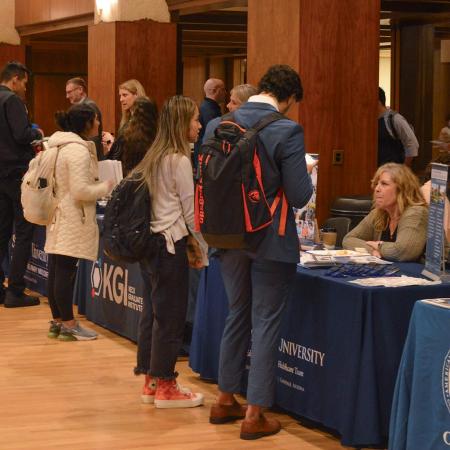
For more information about health careers in Oregon visit this website. On campus every year the College of Science sponsors a Health Professions Career Fair in April, and this is an excellent opportunity to talk to people who represent many different health careers.